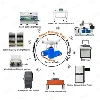
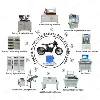
Because individual cells differ in eight aspects-voltage, capacity, charge level, internal resistance, discharge plateau, and constant current ratio-the charge and discharge rates of individual cells in a battery module cannot be synchronized, shortening the overall lifespan of the battery module.

Therefore, capacity grading is necessary to ensure that individual cells within the same module exhibit the following consistency: voltage; cycle life; capacity; self-discharge; charge level; internal resistance; discharge plateau; and constant current ratio.
I. Voltage Consistency
1. Inconsistent voltage in a series circuit will cause overcharging and over-discharging, making it impossible for the management system to control the battery system.
2. Inconsistent voltage in a parallel circuit requires the batteries to perform charge and discharge balancing until their voltages are consistent. However, excessive voltage differences between modules will blow the fuse (PCB board structure). The allowable voltage difference between the fuses is <0.6V.
3. Excessive voltage differences between series-connected modules can only be resolved through active balancing via the BMS. In severe cases, manual charging and discharging or removing the faulty battery is necessary.

(Battery No. 3 has the risk of over-discharge)

(Battery No. 3 has the risk of overcharging)
II. Consistent Capacity
Inconsistent capacity is the main cause of voltage inconsistency, inevitably leading to overcharging and over-discharging risks during charging and discharging.

(Battery No. 2 has definitely been overcharged and overdischarged)
ACEY-BCT506-512H lithium battery capacity tester uses modern electronic monitoring and control devices instead of manual work to monitor the real-time voltage, current, capacity, energy, formation state and other parameters of distributed battery formation in real time, diagnose and handle faults, record and analyze relevant data, so as to realize unattended and batch processing in the formation process.
III. Consistent Charge
Even with consistent battery capacity, inconsistent charge will still cause overcharging and over-discharging.

(a. Continuous charging may cause overcharging of the No.1 battery.)
(b. Continuing to discharge may lead to overdischarge of the No.2 battery.)
IV. Consistent Internal Resistance
Theoretically, each physical battery cell can be divided into two parts: the battery itself and its internal resistance. Inconsistent internal resistance will cause asynchronous charging and discharging of the battery itself.
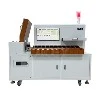
ACEY-AS6SP battery cell sorting machine can classify and sort the voltages and internal resistances of cylindrical batteries such as 18650 and 26650.