Heat issues in lasers
A laser, as a device capable of emitting laser light, operates on the principle of stimulated emission of radiation. Simply put, within the laser, an external energy source (such as electric current or light) excites a gain medium (which can be a gas, solid, liquid, or semiconductor), causing atoms or molecules in the gain medium to transition to a higher energy state. Under appropriate conditions, these high-energy atoms or molecules undergo stimulated emission, releasing photons. These photons continuously reflect within the resonant cavity, stimulating more atoms or molecules to undergo stimulated emission, thereby amplifying the light and ultimately outputting a powerful laser beam from one end of the resonant cavity.

However, this seemingly magical energy conversion process presents a thorny issue. While the laser is generating laser light, most of the input energy is not converted into laser energy output, but rather dissipated as heat. Research has shown that the electro-optical conversion efficiency of many common lasers is often only a few to several tens of percent, meaning that up to 70% to 90% of the electrical energy is converted into heat. If such a large amount of heat cannot be dissipated promptly and effectively, it will have a serious negative impact on laser performance.
First, excessively high temperatures can cause unstable laser output power. Just as a person working in a high-temperature environment is prone to fatigue and errors, the components within the laser struggle to maintain stable operating conditions at high temperatures, causing fluctuations in the output laser power. This power fluctuation is absolutely unacceptable in applications with stringent laser power requirements, such as precision laser processing and laser medical treatment, as it can lead to reduced processing accuracy and poor treatment effectiveness.
Second, rising temperatures can also degrade laser beam quality. Beam quality is a key indicator of laser performance, directly affecting the characteristics of the laser during propagation and focusing. When the laser temperature is too high, the beam divergence angle may increase, and the focused spot may become uneven, seriously affecting the effectiveness of laser applications in materials processing, communications, scientific research, and other fields. For example, when laser cutting metal materials, poor beam quality can result in uneven cut edges and burrs.
Furthermore, prolonged operation in high-temperature environments can accelerate the aging and damage of internal laser components, significantly shortening the laser's lifespan. This not only increases equipment maintenance costs and replacement frequency, but also impacts production efficiency and scientific research progress.

In summary, the significant heat generated by lasers during operation is a pressing issue, and the choice of heat dissipation method is crucial to addressing this problem. So, what are the common heat dissipation methods currently available? Can they meet the heat dissipation needs of lasers?
Air Cooling vs. Water Cooling
To address laser heat dissipation, the two most common cooling methods currently available are air cooling and water cooling. These two are like two "cooling competitors," each showcasing their strengths in different arenas.
Air cooling, as a relatively common and simple heat dissipation method, has found application in the field of low-power laser cooling. Its operating principle is similar to the fans we use in our daily lives: the fan's rotation drives air flow, allowing the air to quickly pass over the surface of the laser's heat-generating components, thereby dissipating heat. The advantages of this heat dissipation method are obvious. First, its structure is very simple, requiring no complex piping or additional equipment such as water tanks. Like a simple small fan, it simply plugs into a power source and operates. This makes it extremely easy to maintain, making even non-professionals able to easily perform basic maintenance tasks. Secondly, air cooling systems are relatively inexpensive, both in terms of equipment purchase and ongoing maintenance costs. This makes them an attractive option for users on a budget. Furthermore, air cooling systems are compact, take up little space, and are easy to install, resembling a compact pendant that can be easily installed in a suitable location near the laser. These advantages make air cooling systems particularly suitable for low-power lasers, such as small UV lasers under 10W. At these low powers, the laser generates relatively little heat, and air cooling systems can effectively dissipate this heat, ensuring proper operation.
However, as laser power increases into the mid- to high-power range, the limitations of air cooling systems become increasingly apparent. This is like a small fan on a hot summer day: its heat dissipation capacity is insufficient for a high-power, heat-generating device. Air cooling has limited heat dissipation efficiency. When the heat generated by the laser increases significantly, the air cannot dissipate enough heat, causing the laser temperature to continue to rise. Furthermore, the heat dissipation efficiency of air-cooling systems is significantly affected by the environment. In high-temperature environments, the air temperature itself is high, significantly reducing its heat dissipation capacity. In poorly ventilated environments, air flow is restricted, preventing effective heat removal, ultimately leading to overheating of the laser and compromising its performance and stability.

In contrast, water-cooling systems offer significant advantages in cooling high-power lasers. The operating principle of a water-cooling system is similar to that of a car engine's cooling system. Water-cooling systems use water or a specialized coolant as the cooling medium, which is circulated through closed pipes by a circulating pump. The coolant first flows through the laser's heat-generating components, absorbing heat before flowing to the radiator. There, a fan or other cooling device dissipates the heat from the coolant into the surrounding air. The cooled coolant then returns to the laser for the next round of heat absorption. This cooling method is extremely efficient, quickly and effectively dissipating the large amounts of heat generated by the laser. This is because water or coolant has a higher specific heat capacity than air, allowing them to absorb more heat for the same mass. When high-power lasers operate at high power for extended periods, water cooling systems ensure stable operating temperatures, ensuring stable output power and beam quality. For example, in large-scale laser cutting equipment, laser powers often reach hundreds of watts or even higher. Water cooling systems effectively handle such intense heat dissipation requirements, ensuring high precision and efficiency during the cutting process.
Furthermore, water cooling systems are highly adaptable, maintaining effective heat dissipation even in high temperatures or harsh environmental conditions, with minimal noticeable impact from ambient temperature. This makes water cooling systems crucial in a variety of complex industrial and scientific research environments, providing a reliable guarantee for stable laser operation.
The ACEY-LWM galvanometer-based fiber laser welding machine integrates a high-performance fiber laser source with our proprietary design, delivering exceptional rigidity and operational stability. Its precision-guided rail mechanism, powered by responsive servo motors, ensures accurate high-speed performance. This equipment is specifically engineered for prismatic and soft-pack lithium battery module assembly applications.
In summary, while air cooling systems offer certain advantages for dissipating heat from low-power lasers, they struggle to cope with the significant heat generated by high-power lasers. Water cooling systems, with their efficient heat dissipation, excellent stability, and robust environmental adaptability, have become the preferred method for dissipating heat from high-power lasers and are widely used in numerous applications with demanding laser performance requirements.
About us
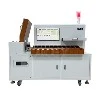
Acey Intelligent specializes in providing one-stop solutions for semi-automatic/fully-automatic assembly lines of lithium battery packs used in ESS, UAV, E-Bike, E-Scooter, Power Tools, Two/Three Wheelers, Etc. In Addition, we provide a complete set of battery pack assembly equipment, such as Cell Grading Machine, Battery Sorting Machine, Insulation Paper Sticking Machine, CCD tester, Manual/Automatic Spot Welding Machine, BMS Tester, Battery Comprehensive Tester and Battery Pack Test System, etc.