With the rapid development of energy storage technology, the safety and stability of the energy storage battery module as the core unit of energy storage and release are of vital importance. The strapping steel belt, a seemingly inconspicuous small component, plays an indispensable role in it. It not only bears the heavy task of fixing the battery monomer and ensuring the stability of the module structure, but is also closely related to the performance indicators such as the heat dissipation and service life of the battery.

1. The role of the strapping steel belt
Fix the battery module: ensure that the battery cell, bracket or shell does not move during transportation or use.
Resist mechanical stress: prevent vibration, impact or extrusion from causing damage to the module structure.
Easy to carry: provide a stable strapping point for easy lifting or transportation.

2. Materials and Properties
The material is usually high-strength cold-rolled steel or stainless steel (such as 304 stainless steel), which should have anti-rust and corrosion-resistant properties (especially in outdoor or high-humidity environments). Surface treatment: galvanization, powder coating or epoxy resin coating to enhance corrosion resistance. Thickness and width: selected based on the weight and load-bearing requirements of the module (common thicknesses range from 0.5 to 1.2 mm, width from 15 to 30 mm).
3. Structural design
The structural design of the steel strapping on the energy storage battery module needs to take into account both strength and flexibility. The steel strap generally adopts a rectangular cross-section, with a width usually between 10-30 mm and a thickness of 0.5-2 mm. This size design can not only ensure that the steel strap has sufficient lateral strength to resist the external forces generated by vibration and impact of the battery module during use, but also enable it to have a certain bending performance to fit the complex shape of the battery module.
The surface of the steel strap is often designed with anti-slip patterns or serrated structures to increase the friction with the surface of the battery module, prevent sliding during the bundling process or long-term use, and ensure the fixing effect. Some steel straps will also have special buckling structures at both ends, such as locks, buckles or bolt connection devices, to facilitate the fast and firm completion of the bundling operation, and facilitate the maintenance and disassembly of the module in the later stage.

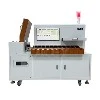
ACEY-SPM1500 Prismatic Battery Stacking and Pressing Machine is suitable for square lithium batteries to be stacked and extruded and trapped in the machine, the use of servo motors + screw module + planetary reducer for stacking and extrusion, controlled by the pressure controller, extrusion and stacking thrust up to more than 500KG
4. Performance characteristics
(I) High strength and fatigue resistance
Energy storage battery modules will generate a certain amount of expansion force during the charging and discharging process, especially when charging and discharging at high rates or working continuously for a long time, this expansion force is more obvious. The strapping steel belt must have high strength to withstand the expansion pressure of the battery module and prevent the battery cells from squeezing and deforming each other due to excessive expansion, or even causing safety accidents. Generally speaking, the yield strength of the strapping steel belt used for energy storage battery modules must reach more than 500MPa, and the tensile strength must exceed 800MPa.
In addition, the battery module will experience frequent charge and discharge cycles in actual use, and each cycle will cause the steel belt to undergo a stress change. This requires the steel belt to have good fatigue resistance, and to be able to avoid failure phenomena such as fracture and cracking under the action of long-term stress cycles, so as to ensure the structural stability of the battery module throughout its life cycle.
(II) Corrosion resistance The working environment of the energy storage battery module is complex and changeable, and may face corrosive environments such as humidity, acid and alkali. Once the strapping steel belt corrodes, its strength will drop significantly, affecting the safety of the battery module. Therefore, steel strips usually use surface treatment processes such as galvanizing, nickel plating, and anti-corrosion coating to improve their corrosion resistance. Galvanized steel strips are a common choice. The galvanized layer can form a dense protective film on the surface of the steel strip, effectively isolating the contact between the external corrosive medium and the steel strip, and extending the service life of the steel strip.
(III) Good electrical conductivity and thermal conductivity
Although the main function of the strapping steel strip is not electrical conductivity and thermal conductivity, it also needs to have certain electrical conductivity and thermal conductivity in some specially designed energy storage battery modules. For example, in some modules that need to use steel strips to achieve electrical connection of battery cells or assist in heat dissipation, the electrical conductivity and thermal conductivity of the steel strip are particularly important. Generally, the performance requirements in this regard are met by selecting suitable steel materials, such as some models of stainless steel, or by special treatment of the steel strip.

In the actual application of energy storage battery modules, strapping steel strips are widely used in various energy storage systems, including electric vehicle battery modules, large energy storage power station battery modules, and household energy storage equipment battery modules. Different application scenarios have slightly different performance requirements for steel strips. For example, electric vehicle battery modules have higher requirements for the fatigue resistance and fixing strength of steel strips due to the high vibration in the working environment; while large-scale energy storage power station battery modules pay more attention to the corrosion resistance and cost control of steel strips.
About Us
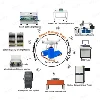
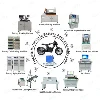
Acey New Energy specializes in providing one-stop solutions for semi-automatic/fully-automatic assembly lines of lithium battery packs used in ESS, UAV, E-Bike, E-Scooter, Power Tools, Two/Three Wheelers, Etc. In Addition, we provide a complete set of battery pack assembly equipment, such as Cell Grading Machine, Battery Sorting Machine, Insulation Paper Sticking Machine, CCD tester, Manual/Automatic Spot Welding Machine, BMS Tester, Battery Comprehensive Tester and Battery Pack Test System, etc. We can provide you professional technical support and guidance, please feel free to contact us!