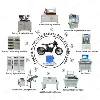
The power battery management system (BMS) is the core unit for controlling and monitoring the power battery pack of electric vehicles. It can realize the precise management of battery charging and discharging, state balance, and temperature regulation by collecting parameters such as voltage, current, and temperature in real time. At the same time, it monitors the safety status and triggers the protection mechanism when an abnormality occurs to ensure the efficient and safe operation of the battery. It also interacts with the vehicle system and is a key technical system for the full life cycle management of power batteries.
The battery management system standard formulated by the International Electric Power Association (IEC) in 1995 clearly defines the main functions of the battery management system, including: displaying the battery state of charge (SOC), providing battery temperature information, alarming for high temperature conditions of the battery, displaying the electrolyte status, early warning of abnormal battery performance, providing battery aging information, and recording key battery data.
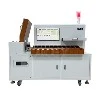
ACEY-BP32-500A800A bms tester machine can detect the function of the lithium battery protection board and various performance indicators. It is especially suitable for factory inspections for mass production. It is developed using the principle of capacitor simulation battery charging and discharging, and has multiple functions: Simple operation, fast detection speed, etc.

The industry standard definition of BMS may be slightly complicated. In layman's terms, the main functions of the power battery management system (BMS) include battery status monitoring, battery status analysis, battery safety protection, energy control management, battery cell information management, and other extended functions such as charging management, thermal management, and fault diagnosis. BMS mainly improves the utilization efficiency of electric vehicle batteries, increases driving range, extends service life, reduces operating costs, and improves the reliability of battery packs/power systems through the realization of the above functions, thereby effectively improving the quality of electric vehicles.
1. Battery status monitoring
Battery status monitoring generally refers to the monitoring of three physical quantities such as voltage, current and temperature, that is, the data acquisition function of the power battery. All algorithms of the battery management system, the energy control strategy of the electric vehicle, the driving information of the driver, etc. use the collected data as input. The sampling speed, accuracy and pre-filter characteristics are important indicators that affect the performance of the battery management system. The sampling rate of the electric vehicle management system is generally required to be greater than 200Hz. The battery energy management system manages the battery according to the signal provided by the sensor installed in the battery pack. The battery box usually has a temperature sensor and a voltage, current or internal resistance measurement device.
Battery status monitoring is the most basic function of a battery management system, and it is the premise and foundation of other functions.
2. Battery Status Analysis
Battery status analysis includes two parts: battery remaining power evaluation and battery aging evaluation, namely the so-called SOC (State of Charge) evaluation and SOH (State of Health) evaluation. Battery status estimation is an important basis for vehicle energy or power matching and control. During the driving process of electric vehicles, the system can calculate the energy consumption of the vehicle at any time, and finally give the SOC value of the power system, which is used by the multi-energy management system or the vehicle controller to configure the power or determine the control strategy. For pure electric vehicles, the driver can know the vehicle's driving range so as to decide how to drive. Under energy-permitting conditions, the vehicle can be parked in a place with charging function to replenish the power to prevent the vehicle from breaking down halfway.
2.1 State of Charge (SOC) SOC is just like traditional car drivers often need to pay attention to how much oil is left in the car. For an electric car driver, it is necessary to know how many percent of the remaining power is left. This is the function that the remaining power evaluation module of the electric vehicle battery management system needs to complete. In addition to being reflected by percentage, the SOC state is often converted into equivalent time or equivalent mileage to allow drivers to obtain more intuitive information. Of course, these are estimated values with certain errors.

2.2 State of Health (SOH) Another important function of battery state analysis is to assess the battery aging state, which is also often reflected by a percentage. In other words, if the maximum capacity of a battery when it is "new" (just out of the factory) is 1, then after multiple cycles, the maximum capacity that the battery can load relative to the percentage of the "new" time reflects the aging state of the battery. For the power battery of an electric vehicle, usually after 500 cycles of deep charging and deep discharging (deep charging and discharging) cycles, the SOH can still reach more than 80%. Many battery manufacturers claim that after 2,000 deep charging and discharging cycles, the SOH is still more than 80%, but this is for single cells with constant charging and discharging currents. According to the author's work experience, the power batteries currently used in electric vehicles have decayed by nearly 20% after 500 deep charging and discharging cycles. It should be pointed out that SOH is affected by factors such as the operating temperature and discharge current of the power battery during use, and needs to be continuously evaluated and updated during use to ensure that the driver obtains more accurate information.
3. Battery safety protection
Battery safety protection is undoubtedly the primary and most important function of the electric vehicle management system. The specific functions of battery safety protection include monitoring whether the battery voltage, current, temperature, etc. exceed the limit, preventing the battery from over-discharging, especially preventing individual battery cells from over-discharging, preventing the battery from overheating and thermal runaway, and preventing the battery from overcharging during energy feedback; alarming the vehicle's multi-energy control system or forcibly cutting off the power supply when the insulation of the power system decreases, and protecting the power system from short circuits. The reason why this function is placed in the third place is that this function is often based on the previous two functions of "status monitoring" and "status analysis". "Overcurrent protection", "overcharge and over-discharge protection", and "overtemperature protection" are the most common battery safety protection contents.
3.1 Overcurrent protection
Overcurrent protection, sometimes also called overcurrent protection, refers to the use of corresponding safety protection measures during the charging and discharging process if the working current exceeds the safe value. Power-type lithium iron phosphate batteries generally support continuous charging and discharging at a rate of 1C. For example, a nominal 100Ah lithium iron phosphate battery allows continuous charging or discharging with a current of 100A. Most lithium iron phosphate power batteries support short-term overload discharge and can provide a large current to meet the requirements of power performance during the start and acceleration of the car. However, the overload current rate and overload duration supported by power batteries of different manufacturers and models are inconsistent.
3.2 Overcharge and over-discharge protection
Overcharge protection refers to the protection measure of cutting off the battery charging circuit in order to prevent battery damage caused by continued charging when the battery's state of charge is 100%. On the other hand, if the battery continues to be discharged when the battery's state of charge is 0, it will also cause damage to the battery. At this time, measures should be taken to cut off the battery's discharge circuit, which is over-discharge protection. Of course, it is very unsafe to suddenly cut off the power supply during the driving of an electric vehicle. Therefore, a more practical method is to warn the driver when the power capacity is insufficient (for example, less than 50%), indicating that the power is insufficient, and gradually reduce the discharge current of the battery, so that the vehicle gradually slows down or stops slowly.
3.3 Overtemperature protection
Overtemperature protection, as the name implies, is to take protective measures for the power battery when the temperature exceeds a certain limit value. Power batteries are a chemical product. Working at high temperatures may cause uncontrollable chemical reactions, which may damage the battery at the least, and cause traffic accidents and casualties in severe cases. As described in the "Battery Status Monitoring" function, overtemperature protection needs to consider the ambient temperature, the temperature of the battery pack, and the temperature of each single cell itself. Since the change of temperature requires a process, temperature control often has hysteresis. Therefore, temperature protection often needs to consider some "advance amount". For example, if the ambient temperature or the battery box temperature is detected to be too high and close to the threshold value that damages the battery, corresponding protective measures should be taken.
4. Energy control management
Energy control management is usually included in the category of battery "optimization management", which means that it is not a basic and necessary function in the battery management system. In the past, many battery management systems neither participated in the charge and discharge management of the battery nor had the ability of balanced control management. In the energy management process, parameters such as current, voltage, temperature, state of charge (SOC), and state of health (SOH) will be used as input information to support the following functions: control the charging process (including balanced charging), limit the input and output power and energy of the power system according to SOC, SOH and temperature, and monitor and manage the discharge process.

5. Battery information management
The communication between the battery management system and the power equipment is one of its core functions. In electric vehicles, the power battery pack usually contains a large number of batteries, which generates a large amount of data every second. Some of these data need to be fed back to the driver in real time through the instrument, some need to be transmitted to other components outside the battery management system (such as vehicle controller, motor controller, etc.) through the communication network, and some need to be stored in the system as historical data. According to actual application requirements, different communication interfaces can be used for data exchange, including analog signals, PWM signals, CAN bus or I2C serial interface, etc. In addition, some battery management systems (BMS) also have remote communication functions, which can transmit relevant data of the power system to a remote terminal to achieve remote monitoring and management of the battery status.
6. Thermal Management
The battery thermal management system (BTMS) is a core component of the automotive power battery system. Its role is not only reflected in the direct impact on battery performance, service life, safety and stability, but also as a key link in the thermal management system of electric vehicles, it is closely related to the thermal management system of the vehicle and operates in coordination. Especially for battery packs that require high-power discharge or are used in high-temperature environments, effective thermal management is a necessary prerequisite for ensuring their normal operation and avoiding performance degradation or safety hazards.
The function of thermal management is to effectively dissipate heat when the battery temperature is high to prevent thermal runaway accidents; to preheat the battery when the temperature is low to increase the battery temperature and ensure charging and discharging performance and safety at low temperatures; to reduce the temperature difference within the battery pack, inhibit the formation of local hot zones, prevent the battery from decaying too quickly at high-temperature locations, and reduce the overall life of the battery pack.
In summary, as the "nerve center" of the power battery, the power battery management system (BMS) has basic functions throughout the entire life cycle of the battery operation - from real-time monitoring of the battery status (voltage, current, temperature, etc.), accurate estimation of the remaining power (SOC) and health state (SOH), to regulating the battery operating temperature through the thermal management system, coordinating the charging and discharging process to maintain stable battery performance, and then realizing information interaction with the vehicle system and historical data storage, providing all-round protection for the efficient operation of the battery.
And the safety protection of the battery is the core mission of the BMS. Through multiple mechanisms such as high-voltage interlocking, insulation monitoring, overvoltage/undervoltage/overcurrent protection, combined with passive safety control and hierarchical disconnection strategies under fault conditions, the BMS can respond quickly when abnormal situations occur, cut off the high-voltage circuit, avoid leakage and thermal runaway risks, and effectively protect the safety of drivers and passengers and vehicle equipment. It can be said that the basic functions of the BMS and the safety protection mechanism complement each other, and together constitute the cornerstone of the reliable operation of the power battery, and are also an important guarantee for the safe and efficient driving of electric vehicles.
Acey Intelligent specializes in providing one-stop solutions for semi-automatic/fully-automatic assembly lines of lithium battery packs used in ESS, UAV, E-Bike, E-Scooter, Power Tools, Two/Three Wheelers, Etc. In Addition, we provide a complete set of battery pack assembly equipment, such as Cell Grading Machine, Battery Sorting Machine, Insulation Paper Sticking Machine, CCD tester, Manual/Automatic Spot Welding Machine, BMS Tester, Battery Comprehensive Tester and Battery Pack Test System, etc.Please feel free to contact us!