1. Impact of the Coating Process on Lithium-Ion Battery Performance
Electrode coating generally refers to the process of uniformly applying a well-mixed slurry onto a current collector and subsequently drying out the organic solvents contained within the slurry.
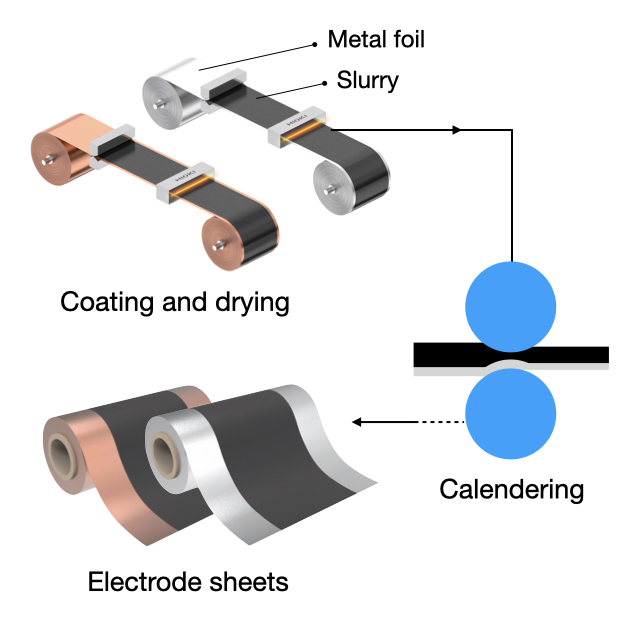
The quality of the coating significantly affects battery capacity, internal resistance, cycle life, and safety; ensuring uniform coating is crucial. The choice of coating method and control parameters has a major impact on lithium-ion battery performance, specifically regarding the following aspects:
① Coating drying temperature control: If the drying temperature is too low, the electrode cannot be fully dried; conversely, if the temperature is too high, the organic solvents inside the coating may evaporate too rapidly, leading to issues such as cracking or delamination of the coating layer.
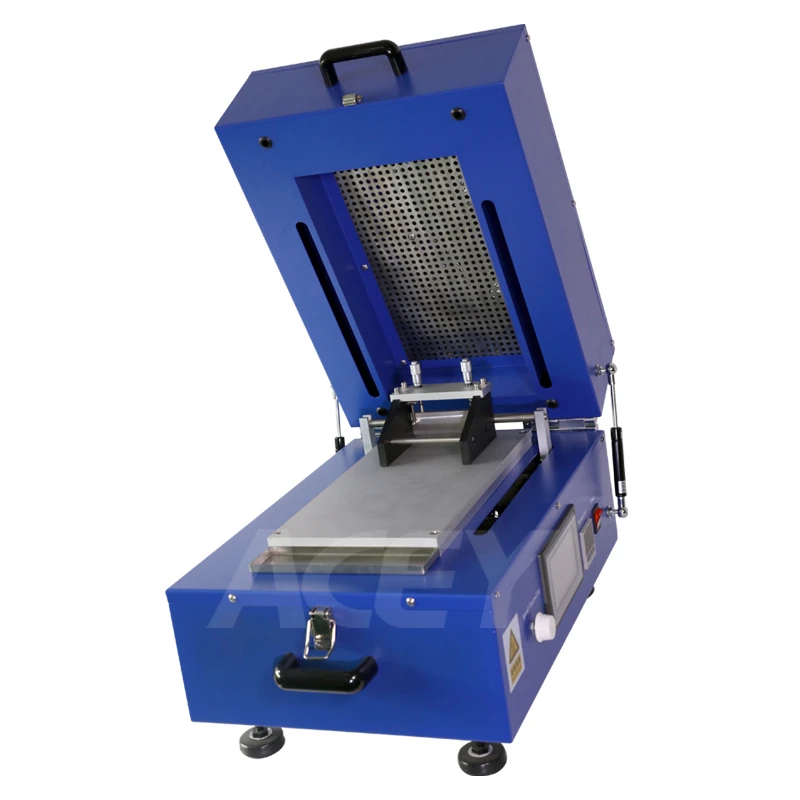
ACEY-HFC250 Automatic electrode coating machine is designed for laboratory research and development involving electrolyte coating for lithium-ion batteries. It enables the controlled application of liquid electrolyte onto designated substrates for experimental evaluation of coating uniformity and process parameters. With its automatic coating function, the machine supports battery material research, electrolyte formulation development, and laboratory-scale process optimization, making it suitable for researchers and battery manufacturers conducting electrolyte-related experiments.
② Coating areal density: If the areal density is too low, the battery may fail to achieve its nominal capacity. If it is too high, it leads to material waste; in severe cases-specifically with excessive cathode capacity-lithium plating can occur, forming dendrites that pierce the separator and cause short circuits, thereby creating safety hazards.
③ Coating dimensions: Incorrect coating dimensions (too small or too large) may result in the cathode not being fully encapsulated by the anode. During charging, lithium ions released from the cathode may migrate into electrolyte regions not fully covered by the anode, preventing the cathode's actual capacity from being effectively utilized. In severe cases, internal lithium dendrites may form, potentially piercing the separator and causing internal short circuits.
④ Coating thickness: Coating thickness that is either too thin or too thick affects the subsequent electrode calendering process, making it impossible to ensure consistent electrode performance.
⑤ Safety considerations: Proper "5S" practices must be implemented prior to coating to ensure that no particles, debris, or dust contaminate the electrode. Such contaminants can cause internal micro-short circuits, which, in severe instances, may lead to battery fires or explosions. ⑥ Conditions for stable coating:
Stable slurry properties (no sedimentation; minimal fluctuations in viscosity and solid content);
Stable slurry supply, establishing a uniform and steady flow state within the die head or on the coating and transfer rollers;
Coating process parameters maintained within the "coating window," ensuring a stable flow field between the die head and the coating roller;
Stable foil transport, avoiding slippage, severe vibration, or wrinkling (managed via tension and edge-guiding controls).
2. Coating Process and Characteristics
In a broad sense, the coating process encompasses: unwinding, splicing, web threading, tension control, coating, drying, edge guiding, tension control, edge guiding, and rewinding. The coating process is complex and influenced by numerous factors-such as equipment manufacturing precision, operational stability, dynamic tension control during coating, and airflow volume and temperature profiles during drying. Consequently, selecting the appropriate coating process is crucial.
Generally, the selection of a coating method requires consideration of several factors: the number of coating layers, wet coating thickness, rheological properties of the coating fluid, required coating precision, the coating substrate (or base material), and coating speed.
In addition to the factors above, the specific conditions and characteristics of electrode coating must be taken into account. The characteristics of lithium-ion battery electrode coating include:
① double-sided, single-layer coating;
② relatively thick wet slurry coatings (100–300 μm);
③ slurry acting as a high-viscosity, non-Newtonian fluid;
④ high precision requirements, comparable to those for photographic film coating;
⑤ substrates consisting of aluminum or copper foil with thicknesses of 10–20 μm;
⑥ relatively low coating speeds compared to film coating.
Based on these factors, laboratory equipment typically employs the doctor blade method; consumer-grade lithium-ion batteries often utilize roll transfer coating; and power batteries predominantly use the slot-die extrusion method.
3. Coating Defects and Influencing Factors
Minimizing coating defects, improving coating quality and yield, and reducing costs are key areas of study in the coating process. Common issues encountered during the coating stage include uneven thickness (thick head/thin tail), thick edges on both sides, dark spots, surface roughness, and exposed foil. Thickness variations at the head and tail can be adjusted by controlling the switching times of the coating valve or intermittent valve. Thick-edge issues can be mitigated by addressing slurry properties, adjusting the coating gap, and controlling slurry flow rate. Surface roughness, unevenness, and streaking can be improved by stabilizing the foil substrate, reducing coating speed, and adjusting the air knife angle.
Relationship between basic slurry properties and coating: In actual processing, slurry viscosity significantly affects coating performance. Viscosity varies depending on factors such as electrode raw materials, slurry formulation ratios, and the type of binder used. If the slurry viscosity is excessively high, continuous and stable coating becomes difficult, and the final coating quality is compromised.
The uniformity, stability, and edge/surface effects of the coating fluid are influenced by its rheological properties, which directly determine the quality of the coating layer. Research methods such as theoretical analysis, coating experiments, and computational fluid dynamics (CFD) using finite element analysis are employed to study the "coating window"-the range of process parameters within which stable coating and uniform layers can be achieved.
Surface Tension: The surface tension of the copper or aluminum foil must be higher than that of the coating solution; otherwise, the solution will not spread evenly across the substrate, resulting in poor coating quality. A general rule of thumb is that the surface tension of the coating solution should be approximately 5 dynes/cm lower than that of the substrate. The surface tensions of both the solution and the substrate can be adjusted through formulation modifications or substrate surface treatments.
Uniformity of Thickness: In processes such as blade coating, uneven thickness across the width of the substrate leads to uneven coating thickness. This is because the coating thickness is controlled by the gap between the blade and the substrate; if the substrate is thinner at a specific point across its width, more coating solution passes through that area, resulting in a thicker coating layer, and vice versa. If thickness fluctuations are detected in the substrate, the final coated film will exhibit corresponding thickness variations. Furthermore, transverse thickness deviations can lead to winding defects. Therefore, controlling the thickness of the raw material is crucial to preventing such issues.
Static Electricity: Static electricity often builds up on the substrate surface during unwinding and as it passes over rollers on the coating line. This static charge attracts dust from the air and rollers, causing coating defects. During discharge, static electricity can create visible surface defects and, in severe cases, even pose a fire hazard. Static-related problems are particularly pronounced during winter when humidity levels are low. The most effective ways to mitigate these defects include maintaining higher ambient humidity, properly grounding the coating line, and installing anti-static devices.
Cleanliness: Impurities on the substrate surface can cause physical defects such as protrusions or contamination spots. Consequently, strict control over raw material cleanliness during the substrate manufacturing process is essential. Using an in-line film cleaning roller is an effective method for removing impurities from the substrate. While it may not eliminate every single impurity, it significantly improves raw material quality and reduces waste.
Conclusion
The lithium-ion battery electrode coating process plays a critical role in determining battery capacity, consistency, cycle life, and safety. From slurry preparation and coating thickness control to drying temperature management and defect prevention, every stage requires precise process control and stable equipment performance.
At ACEY New Energy, we provide lithium battery manufacturing equipment and customized production line solutions to support different battery production requirements. Whether you are establishing a pilot-scale production line or upgrading an existing manufacturing process, our team can help you identify suitable equipment for your project.
Contact ACEY to discuss your lithium battery manufacturing needs and explore equipment solutions tailored to your production goals.