Main Features of Cylindrical, Prismatic and Polymer Lithium Batteries
Circular lithium batteries refer to cylindrical lithium batteries. The earliest cylindrical lithium battery was the 18650 lithium battery invented by Japan's SONY in 1992. Because the 18650 cylindrical lithium battery has a long history, the market penetration rate is very high. Cylindrical lithium batteries use a fairly mature winding process, with a high degree of automation, stable product quality and relatively low cost. There are many types of cylindrical lithium batteries, such as the common 14650, 17490, 18650, 21700, 26650, etc.
Prismatic lithium batteries usually refer to aluminum or steel prismatic batteries. With the rise of automotive power batteries in recent years, the contradiction between vehicle range and battery capacity has become increasingly prominent. Many power battery manufacturers mainly use aluminum prismatic batteries with higher battery energy density. Because the structure of prismatic batteries is relatively simple, unlike cylindrical batteries that use high-strength stainless steel as the shell and accessories such as explosion-proof safety valves, the overall accessories are light and have a relatively high energy density. Prismatic batteries have two different processes: winding and lamination.
Polymer lithium batteries are square batteries that use polymer colloidal or solid electrolytes. Their manufacturing processes are very similar. Currently, most soft-pack batteries on the market belong to polymer batteries. Polymer lithium batteries are mostly used in high-end 3C products such as mobile phones and tablets. Because polymer electrolytes are all artificially synthesized, the cost is relatively high. Currently, there is no cost advantage in power batteries. Moreover, polymer batteries are prone to danger because they do not have a hard shell for protection, so corresponding safety measures must be taken when using them.
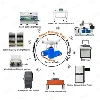
Three different batteries need to go through a series of steps during the production process. The following are some of the core equipment:
Front-end equipment (electrode manufacturing)
Lab vacuum mixer: used to mix positive and negative solid-state battery materials, add solvents and stir into a slurry.
Battery coating machine: evenly coat the stirred slurry on the copper foil or aluminum foil current collector, which is the most critical equipment in the front-end process.
Battery roller press machine: compact the coated electrode material to achieve the ideal thickness and density.
Die-cutting machine: cut the compacted electrode material into the required size.

Mid-stage equipment (cell synthesis)
Battery winding machine or battery stacking machine: wind or stack the positive and negative plates together with the diaphragm to form an unactivated cell.
Battery spot welding machine: used to weld the pole ears of the cell to ensure the connection of the cell.
Electrolyte Digital Injector: inject electrolyte into the cell, which is the core equipment of the mid-stage process.
Cylindrical lithium battery
Advantages:
• Good single consistency, mature production process, high degree of automation, stable product quality, and relatively low cost.
• High pressure resistance, safe and not easy to explode, high energy density, low resistance.
• Rich application scenarios, large specific surface area, good heat dissipation effect.
• Cylindrical batteries are generally sealed batteries, and there is no maintenance problem during use.
• The battery shell has good mechanical properties and high pressure resistance, and basically no bulging and expansion.
Prismatic lithium battery
Advantages:
• High packaging reliability, high system energy efficiency, relatively light weight, and high energy density.
• The structure is relatively simple, the expansion is relatively convenient, the single cell capacity is large, and the stability is relatively good.
• The internal resistance is low, and it can discharge continuously with a large current.
• The packaging shell is mostly made of aluminum alloy and stainless steel, which has good stability and is not easily damaged by external impact.
Polymer lithium battery
Advantages:
• Good safety performance, basically no explosion, at most bulging, when bulging occurs, the characteristics are obvious, and it is easy to take measures in time.
• Lightweight, the weight of polymer batteries is 40% lighter than that of steel-shell lithium batteries of the same capacity, and 20% lighter than that of aluminum-shell lithium batteries.
• Large capacity, the capacity of polymer batteries is 10-15% higher than that of steel-shell batteries of the same specifications and sizes, and 5-10% higher than that of aluminum-shell batteries.
• Low internal resistance, the internal resistance of polymer batteries is smaller than that of lithium batteries, which greatly reduces the self-consumption of batteries.
• Flexible design and layout, polymer batteries can be bent and deformed as needed, suitable for products with flexible design.
The above summarizes the main characteristics of the three types of lithium batteries, each of which has its specific application scenarios and advantages. Cylindrical lithium batteries have advantages in certain fields due to their mature technology and high consistency. Prismatic lithium batteries are favored in fields such as electric vehicles due to their high energy density and simple structure, while polymer lithium batteries are widely used in fields such as consumer electronics due to their high energy density and design flexibility.

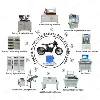
Lithium battery PACK is an indispensable part of lithium battery manufacturing. Whether it is cylindrical lithium batteries or prismatic or polymer lithium batteries, they can be assembled together with battery cells, protection boards, circuits and other components through the PACK process to form a complete lithium battery product, ensuring the safety, reliability and performance stability of lithium batteries. In the production process, a series of testing equipment such as CCD Tester and BMS testers are also needed to ensure the application of packs.