As battery technology sees widespread application in electric vehicles, energy storage systems, and consumer electronics, the Battery Management System (BMS)-acting as the "brain" that ensures safe and efficient battery operation-plays a critical role; its performance and reliability directly impact equipment stability and user experience. However, the functional complexity of BMS units continues to grow-spanning everything from voltage monitoring and cell balancing to thermal management-meaning even minor defects can lead to safety hazards or performance degradation. Consequently, systematic testing and validation of BMS functions have become an indispensable part of the R&D and manufacturing processes.
I. Why is BMS testing necessary?
The BMS (Battery Management System) is a vital component of electric vehicles and energy storage systems. It is responsible for monitoring and managing battery charging and discharging processes, preventing overcharge or over-discharge, and extending battery lifespan. Its core functions include voltage measurement, energy balancing, State of Charge (SOC) calculation, and dynamic monitoring.

Given its critical role in battery safety, the BMS cannot afford to fail. BMS products must undergo rigorous testing during R&D and production, including checks for insulation and withstand voltage performance, data acquisition accuracy, and the validation of various algorithms and control strategies.
II. What is a BMS test system?
As previously mentioned, BMS products require comprehensive functional testing-either at the end of the production line or prior to assembly. However, testing a BMS with unverified balancing and protection logic using an actual battery pack presents two major issues: safety risks (such as battery thermal runaway) and efficiency problems (as transitioning real batteries to specific states takes time).
To address these challenges, BMS test systems were developed. These systems can be customized to meet specific testing requirements and facilitate FCT (Functional Circuit Test) or EOL (End-of-Line) testing. They utilize test fixtures and connectors to interface with the Device Under Test (DUT), simulate its operating environment, verify pin output functionality, and integrate with software to execute automated testing workflows.
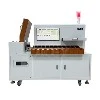
ACEYY-BP24-300A400A bms tester machine is a high-precision testing platform designed for comprehensive functional verification of lithium battery protection boards and battery management systems (BMS). The system can accurately detect key BMS protection functions including: overcharge protection; overdischarge protection; overcurrent protection; short circuit protection; balancing voltage; balancing current; self-consumption current.

III. What are the main components of a BMS test system?
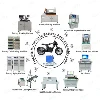
A complete BMS test system consists of the following key components, providing resources that correspond to the hardware I/O signals of the BMS controller:
Battery Simulator: Simulates the voltage and current responses of individual battery cells, enabling the testing of various battery configurations and states.
Temperature simulator: Simulates the temperature distribution of battery modules and packs to test the BMS's thermal management functions.
High-voltage DC power supply: Simulates the total voltage of the battery pack. High-current DC power supply: Simulates the total current of the battery pack.
CAN communication module: Simulates communication between the BMS and components such as the Vehicle Control Unit (VCU), on-board charger, and off-board charger; tests the BMS's communication protocols and data exchange capabilities.
Insulation resistance module: Simulates insulation and withstand voltage conditions.
Data acquisition card: Collects BMS output signals, such as relay and contactor statuses. Control computer: Manages the operation of the entire test platform, executes test scripts, and records and analyzes test data.
IV. What are the main BMS test items?
A comprehensive BMS testing system supports tests categorized as follows:

State detection accuracy test: Adjusts parameters such as temperature, current, cell voltage, total voltage, and insulation resistance; compares standard values with BMS-measured values to calculate measurement errors (including maximum, minimum, and average error values) for these parameters.
SOC accuracy test: Configures the cell simulator to operate according to specific battery test profiles; the BMS estimates the battery's State of Charge (SOC) based on detected data, allowing for the assessment of SOC estimation accuracy.
Battery fault diagnosis test: Injects various faults-such as cell over/under-voltage, significant voltage inconsistency across battery clusters, reverse battery connection, cluster overcurrent, cell temperature extremes or inconsistency, and voltage/temperature sensing line failures-to evaluate the BMS's fault diagnosis capabilities.
Insulation resistance detection test: Adjusts insulation resistance parameters and compares them against the BMS's measured values to determine compliance.
Communication test: Tests the functionality of each BMS communication port to ensure accurate data transmission and processing.
Control strategy test: Evaluates control strategies, such as charging and thermal management, to verify that BMS control actions align with expectations.
Electrical adaptability test: Sets the auxiliary power supply voltage above or below the normal operating range to observe whether the BMS system's response meets expectations.
Insulation withstand voltage test: Tests the insulation performance of the BMS.
V. What are the advantages of the BMS testing system?
1. Safety
Eliminates the safety risks associated with using actual batteries.
2. Flexibility
Parameters and configurations can be adjusted to test BMS performance under various operating conditions.
3. Accuracy
High-precision equipment ensures the accuracy of test data.
4. Efficiency
Automated testing improves efficiency and shortens the product development cycle.
about Us
Our product range includes battery cell testers, BMS test systems, battery pack testers, spot welding machines, sorting machines, insulation paper sticking machines, aging test machine, and fully automated battery pack assembly lines for cylindrical, prismatic, and pouch cells. We provide customized solutions for EV batteries, energy storage systems (ESS), consumer electronics, power tools, UAV batteries, and other lithium battery applications.
Whether you are building a laboratory, pilot line, or mass production factory, ACEY is committed to delivering reliable equipment, professional technical support, and turnkey battery manufacturing solutions to help customers improve product quality and production efficiency.
Learn more about ACEY: ACEY New Energy
Looking for a reliable BMS tester or a complete battery pack assembly solution? Contact ACEY today for professional consultation and customized equipment recommendations.